
Long-Term Value: A Filter That Lasts a Decade Plus
Reusable furnace filters can save you time, money, and reduce waste. Unlike disposable filters that need frequent replacement, these washable filters last over 10 years with proper care. They use electrostatic technology to trap dust, pollen, and pet dander, while maintaining efficiency even after repeated washes.
Here’s why they’re worth considering:
- Cost Savings: Spend $130 upfront versus $600+ on disposables over 10 years.
- Durability: Built with sturdy materials like aluminum frames and synthetic fibers.
- Eco-Friendly: Prevents 40–120 disposable filters from ending up in landfills.
- Low Maintenance: Clean every 1–3 months to keep them effective.
Switching to a reusable filter means cleaner air, fewer replacements, and long-term savings. Below, we’ll explore how these filters work, how to maintain them, and how to choose the right one for your home.
Let's dive into how long-term reusable filters keep your air clean and fresh for years.
These filters rely on a combination of electrostatic technology and mechanical capture to purify the air. As air flows through, particles become electrically charged, causing them to cling to oppositely charged fibers. At the same time, the filter physically traps particles through inertia. This two-part process effectively captures both large dust particles and smaller allergens like pollen and pet dander.
Key Features of 10+ Year Filters
What makes these filters last so long? They’re built with durable synthetic fibers and sturdy frames made from aluminum or heavy-duty plastic. Unlike paper or fiberglass filters, these materials hold their shape and maintain their electrostatic charge, even after repeated washes. Some manufacturers even claim their filters can last as long as your HVAC system itself.
MERV Ratings Explained
MERV (Minimum Efficiency Reporting Value) ratings indicate how well a filter captures airborne particles. Reusable electrostatic filters typically fall between MERV 4 and MERV 10, with some high-performing models reaching MERV 11.
For most homes, filters rated around MERV 7–8 strike the right balance. They can trap up to 70% of large particles (3.0–10.0 microns) and about 20% of medium-sized particles (1.0–3.0 microns). While higher MERV ratings mean better filtration, they can also increase airflow resistance. If your HVAC system isn’t designed for higher-rated filters, it’s best to consult a professional before upgrading to a MERV 8 or above. Knowing these ratings helps you choose a filter that balances efficiency and airflow.
What Affects Filter Lifespan
Several factors influence how long reusable filters last. Indoor air quality is a big one - homes with pets, carpets, or smokers tend to accumulate debris faster, requiring more frequent cleaning. Similarly, the runtime of your furnace matters. Systems that run constantly, especially in extreme climates, will clog filters more quickly than those used less often.
Proper sizing is also crucial. Filters that don’t fit perfectly leave gaps, allowing unfiltered air to bypass the media. And of course, regular maintenance is key. Washing and drying your filter thoroughly every month keeps it working efficiently. Neglecting this step can lead to reduced performance and even mold growth over time.
"A washable filter, due to its plastic-like material, can last up to five years, while a household can use 60 or more non-washable filters in the same period of time." - Cora Koci
The Long-Term Value of Reusable Filters
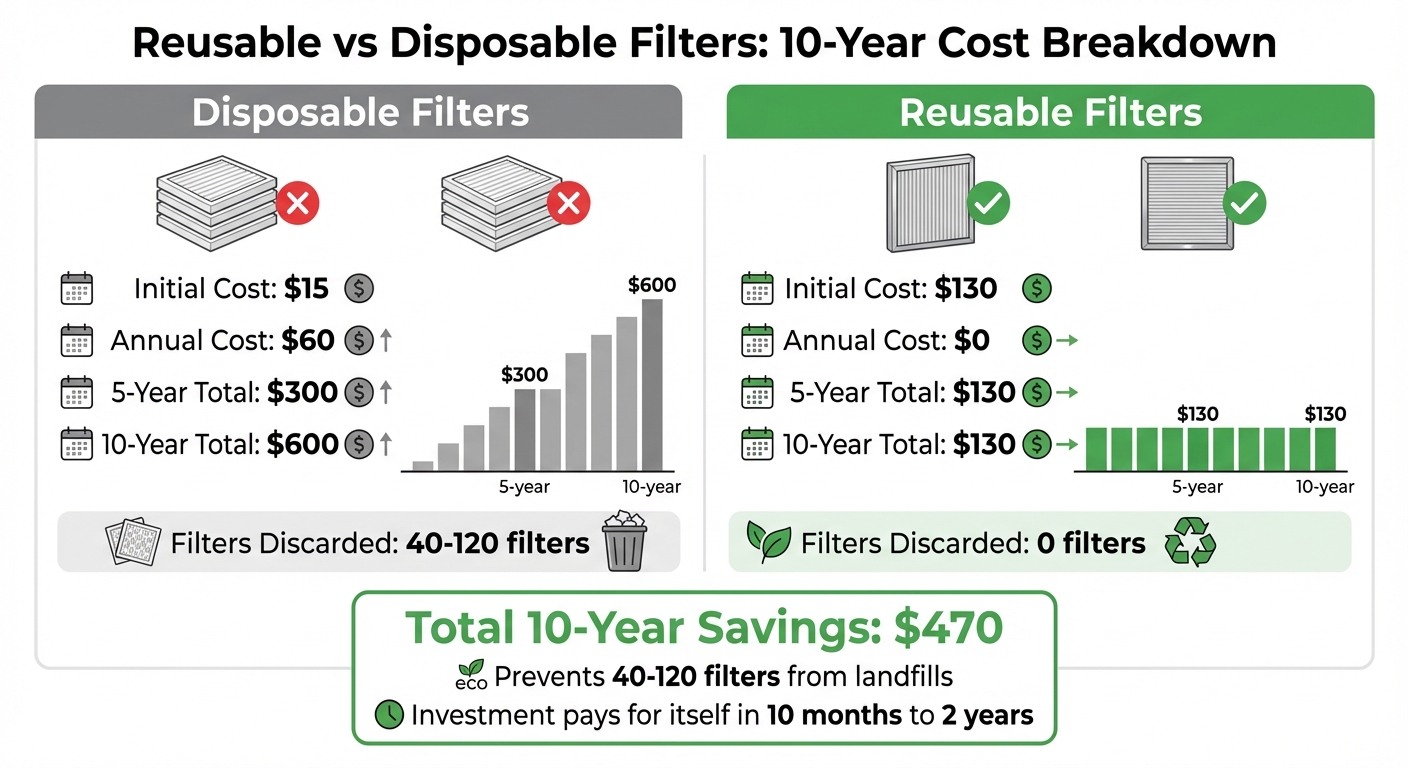
10-Year Cost Comparison: Reusable vs Disposable Furnace Filters
One reusable filter can replace decades' worth of disposable ones. While the upfront cost ranges from $80 to $180, these filters typically pay for themselves within 10 months to 2 years. After that, every month you would have spent on disposable filters becomes money saved.
Cost Savings Over 10 Years
Let’s break it down: if a household spends $15 per disposable filter, the total cost over 10 years adds up to $600. Compare that to a reusable filter, which costs about $130 for the same period. That’s a $470 difference in savings.
| Filter Type | Initial Cost | Annual Cost | 5-Year Total | 10-Year Total | Filters Discarded |
|---|---|---|---|---|---|
| Disposable | $15 | $60 | $300 | $600 | 40–120 filters |
| Reusable | $130 | $0 | $130 | $130 | 0 filters |
| Total Savings | –$115 | $60 | $170 | $470 | 40–120 fewer |
"With a washable filter, I will save the cost of the disposable filters within a year and a half. This is well worth the investment."
– Paul from Oregon, Verified User
Reusable filters also help reduce costs for professional duct cleaning, often cutting those expenses by more than 50%. Their superior dust-trapping capabilities make a noticeable difference over time. As Mark Snell, CEO/President of Polestar Plumbing, Heating & Air Conditioning, puts it:
"It's important to consider that despite the higher initial cost of washable filters, the overall cost will likely level off in the long run. You won't need to purchase washable filters very often, so the long-term cost... will probably be the same or even lower than that of disposable filters."
The durability of reusable filters is a major factor in these long-term savings.
Durability Features That Extend Lifespan
Reusable filters are built to last over a decade, thanks to their woven polypropylene media. This synthetic material resists abrasion, tearing, moisture, and mold, while maintaining its structure through more than 50 wash cycles.
Another standout feature is their permanent electrostatic charge. Unlike filters that rely on adhesives or coatings, the electrostatic properties of these filters remain intact no matter how often they’re used or washed. ElectroDust highlights this advantage:
"Since static electricity remains constant over time, these filters will never lose their electrostatic properties, regardless of how long they are used or how often they are washed."
Many manufacturers offer lifetime warranties, and some even provide replacement sleeves if the filter media wears out. This allows you to reuse the permanent frame, further extending the product's lifespan.
How Reusable Filters Reduce Waste
Beyond saving money and lasting longer, reusable filters significantly cut down on waste. Every year, approximately 250 million single-use HVAC filters are discarded, contributing to the growing plastic waste problem. Tony Griffiths, a verified user, shared his experience:
"I hated throwing out the bulky used filters and searched for a more environmentally friendly way to filter our home's air; what a discovery! ...Plus the peace of mind of less waste throwing out old ones."
Reusable filters also promote sustainability in other ways. Many are made from 100% post-consumer recycled materials, such as recycled HDPE frames and fabric media. Additionally, they are far more efficient to ship - up to 84% more so than bulky disposable filter packs - helping to reduce transportation emissions. Over a decade, using a reusable filter can prevent the equivalent of 1,050 plastic bottles from ending up in landfills.
Choosing the Right Long-Term Filter for Your Home
When it comes to long-term benefits, selecting the right filter for your home is crucial. Here's what to keep in mind to make the best choice.
What to Look for When Buying
A great reusable filter strikes the perfect balance between air cleaning efficiency and compatibility with your HVAC system. For most homes, filters with MERV ratings between 8 and 10 are sufficient. If you or your family members suffer from allergies, consider ratings between 11 and 13 for better filtration. However, be cautious with filters rated above MERV 13, as they might restrict airflow in standard systems.
Look for filters made with electrostatic polypropylene media and backed by a 10-year or lifetime warranty - these features often indicate a durable, high-quality product. The frame is another important factor; metal frames generally last longer than plastic ones. And don’t overlook measurements - accurate sizing ensures your filter fits properly and works efficiently.
How to Measure for the Right Fit
Getting the right fit starts with understanding the actual dimensions of your system. Don’t rely solely on the printed size, often referred to as the nominal size. For example, a filter labeled as 20x24x1 may actually measure closer to 19.5" x 23.5" x 3/4". Use a tape measure to confirm the height, width, and depth of your filter slot in inches - this will give you the actual size needed.
If your system doesn’t currently have a filter installed, measure the intake slot directly. Most residential HVAC systems use 1-inch thick filters, but some modern systems may require 4-inch media filters. Proper sizing is essential for maintaining both filtration efficiency and HVAC performance. When installing your new filter, check the arrows on the frame - they should point toward the furnace and away from the return air duct.
Why Choose ElectroDust
By following these guidelines, you can ensure your investment in a long-term filter, like ElectroDust, pays off. ElectroDust filters are built to last, with a 10-year-plus lifespan and washable polypropylene media that maintains its MERV 7 rating even after multiple washes. This ensures reliable filtration without compromising your system’s airflow.
ElectroDust’s lifetime warranty underscores its durability, and for homes with non-standard HVAC slots, they offer custom sizing to create a perfect seal. At approximately $130, the filter pays for itself in under a year compared to disposable alternatives. With ElectroDust, you’re not just buying a filter - you’re committing to a decade of cleaner air and eliminating the hassle of recurring costs.
Maintaining Your Reusable Filter for 10+ Years
With its sturdy design, your reusable filter is built to last over a decade - but proper care is key to reaching that lifespan. Keeping it clean not only extends its durability but also ensures your HVAC system runs efficiently and maintains healthy indoor air quality.
How to Clean Your Filter
Before starting, make sure to turn off your HVAC system. Locate the filter, usually found between the return duct and the air handler. To avoid installation mistakes later, mark the airflow direction on the furnace frame using a permanent marker.
Begin by vacuuming off loose dust with a soft brush attachment. Next, rinse the filter under lukewarm water. For a deeper clean, gently scrub it with mild dish soap and a soft brush until the water runs clear. To avoid mineral buildup, finish with a rinse using distilled water.
"You should never install a filter containing water molecules, it must be completely dry for it to function properly." - LifeSupplyUSA
Shake off any excess water and let the filter air dry completely before reinstalling it. A damp filter can lead to mold growth and obstruct airflow. When reinstalling, ensure the airflow arrows face the furnace blower. Avoid using bleach or harsh chemicals, as they can damage the filter and void its warranty.
How Often to Clean Your Filter
The cleaning frequency depends on your household conditions. As a general rule, clean the filter every 1 to 3 months and inspect it monthly for buildup. If you have pets, smokers, or allergy sufferers in the home, cleaning every 30 days is recommended. During heavy HVAC use - like in the middle of summer or winter - you might need to clean it more often.
| Household Condition | Recommended Cleaning Interval |
|---|---|
| Standard Household | Every 3 months |
| Pets or Allergies | Every 30 days |
| Heavy HVAC Usage (Peak Seasons) | Every 30 days or as needed |
When to Replace Your Filter
Even though ElectroDust filters are designed to last over a decade, no filter lasts forever. If your filter remains visibly dirty or clogged after a thorough cleaning, it’s time for a replacement. Another indication is if any part of the filter blocks light when held up to it - this means it’s permanently clogged.
"Consider buying a new washable HVAC filter if you notice a significant drop in airflow, or if the filter appears visibly dirty and clogged despite cleaning." - Tom Moor, HVAC.com
Other signs that it’s time to replace your filter include visible damage to the frame, clips, or mesh fabric. Additionally, if you notice reduced airflow, rising energy bills, or persistent dust in your home despite cleaning the filter, it’s likely time for a new one.
Conclusion
Switching to a reusable furnace filter isn’t just about saving money - though the savings are impressive. Over a decade, you’ll spend roughly $130 for a reusable filter compared to about $600 for disposable ones. Plus, you’ll keep 40 to 120 filters out of landfills, making it a win for both your wallet and the planet. Most households see the investment pay off in full within just 10 months of use.
But the benefits don’t stop there. These filters actively protect your HVAC system and improve indoor air quality by maintaining a constant electrostatic charge, even after repeated washes. This ensures they continue to attract dust, pollen, and pet dander without losing effectiveness. With a MERV 7 rating, they strike the perfect balance - capturing allergens while allowing optimal airflow. This means less buildup in your ducts and fewer professional cleanings needed.
By washing your ElectroDust filter every 1 to 3 months, it can outlast most HVAC systems. And with a lifetime warranty, you’re not just buying a filter - you’re investing in cleaner air, lower energy bills, and a more sustainable home. It’s a practical solution that reduces waste, saves money, and supports a healthier living environment.
Switching to a reusable filter means fewer store runs, less waste piling up in landfills, and more cash staying in your pocket. It’s a simple change that makes a big difference.
FAQs
How can reusable furnace filters help me save money in the long run?
Reusable furnace filters offer a budget-friendly alternative to disposable ones. Although a top-notch reusable filter might set you back about $130, it can serve you for over ten years, potentially replacing as many as 60 disposable filters. This means homeowners can save hundreds of dollars - typically around $100–$200 annually - by avoiding the need for constant replacements.
Beyond saving money, these filters are built to last, simple to clean, and reduce waste, making them a practical choice for both your finances and the planet.
How do I properly clean and maintain a reusable furnace filter?
To ensure your reusable furnace filter remains effective for years, it's important to clean it regularly and handle it with care. Start by confirming that your filter is washable - filters like HEPA and fiberglass are not meant for cleaning and should be replaced instead. Once you've verified this, turn off your HVAC system, remove the filter, and gently tap it over a trash can to shake off any loose debris.
Next, rinse the filter thoroughly using lukewarm water (about 100°F) to wash away lingering dust. Prepare a basin with warm water and add a few drops of mild dish soap. Submerge the filter and gently move it around to clean it - avoid scrubbing or using abrasive tools, as these can damage the material. Once it's clean, rinse it well to remove all soap residue. Let the filter air-dry completely in a well-ventilated space for at least 12 hours before reinstalling it. Steer clear of using dryers or exposing the filter to direct heat, as this could cause harm.
Before putting the filter back in place, check for any signs of wear or damage. To keep it performing at its best, clean the filter every 1–3 months, or more frequently if you have pets or deal with a lot of dust. With regular care, your filter can last over a decade, all while improving your home's air quality and keeping your HVAC system running efficiently.
How can I choose the best MERV rating for my home's air filter?
Choosing the right MERV (Minimum Efficiency Reporting Value) rating for your air filter comes down to your household’s air quality needs and the capabilities of your HVAC system. MERV ratings range from 1 to 16, with higher numbers designed to capture smaller particles. For instance, a MERV 8 filter can handle common irritants like dust and pollen, while a MERV 13 filter is capable of trapping bacteria and even particles as small as viruses.
To get started, assess your home’s specific needs. A MERV 8 filter is usually enough for homes without pets or allergy concerns. If you have pets or mild allergies, a MERV 11 filter offers enhanced filtration without significantly reducing airflow. For households dealing with severe allergies, asthma, or caring for newborns, a MERV 13 filter provides excellent protection. However, it’s crucial to ensure your HVAC system is compatible with higher-rated filters.
Always check your furnace’s specifications before upgrading your filter. Manufacturers typically specify the maximum MERV rating your system can handle without compromising airflow or overworking the blower. Using a filter with a higher rating than recommended can lead to reduced efficiency and increased energy costs. For most U.S. homes, a MERV 8–11 filter strikes a good balance between air quality and system performance, while MERV 13 is best suited for those with heightened health concerns. Choosing the right filter not only improves indoor air quality but also helps maintain the efficiency and longevity of your HVAC system.