
The Filter Industry Doesn’t Want You to Know About This
Disposable furnace filters are costing you more than you think - in money, waste, and air quality. But there’s a better option: reusable filters. They’re washable, last up to 10 years, and can save you hundreds of dollars while reducing landfill waste.
Here’s the breakdown:
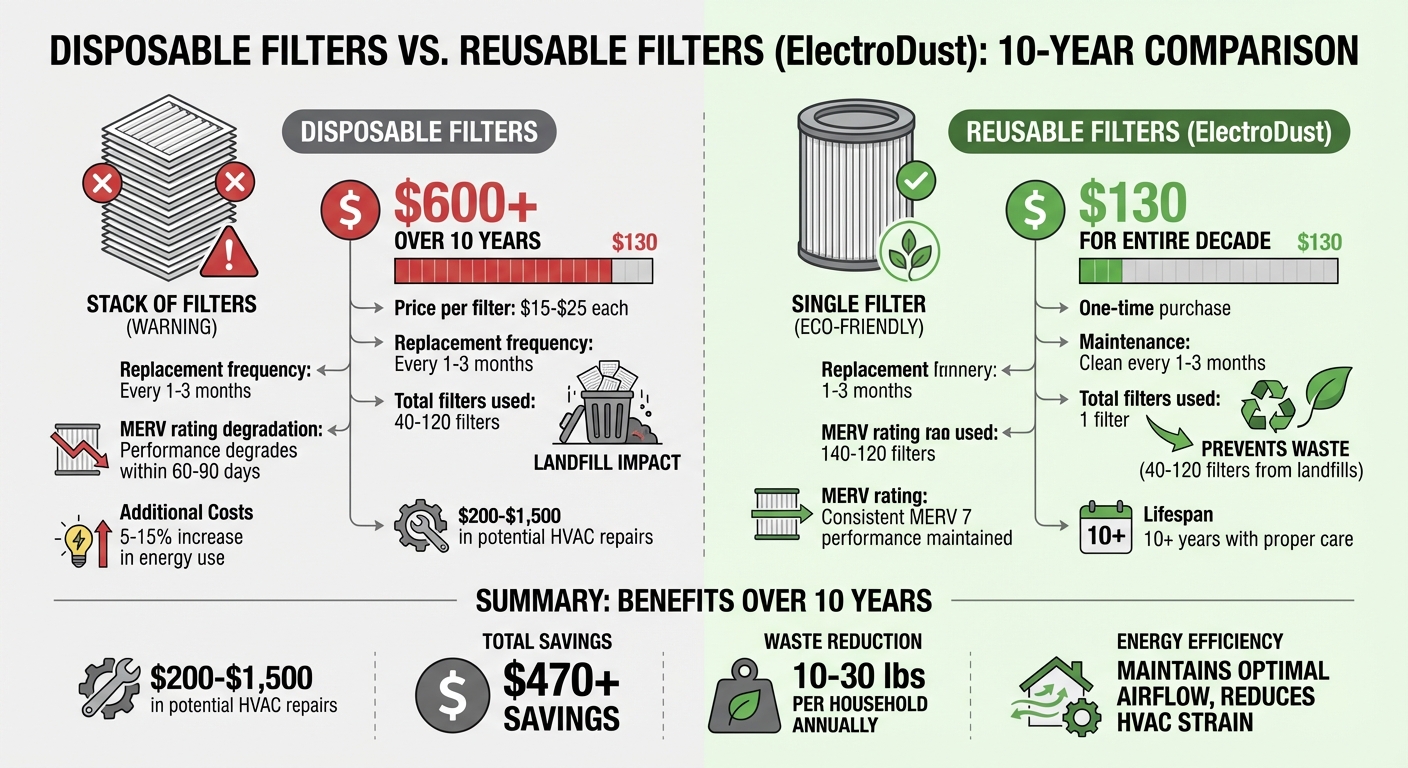
- Disposable filters: $15–$25 each, replaced every 1–3 months, costing $600+ over 10 years, with 40–120 filters ending up in landfills.
- Reusable filters: $130 for a decade, cleaned every month, saving you money and waste.
The filter industry pushes disposables because they rely on repeat sales, but reusable filters, like ElectroDust, disrupt this cycle. They use electrostatic technology to trap dust, pollen, and allergens while maintaining airflow. With proper care, they protect your HVAC system, improve air quality, and cut utility costs.
Switching to reusable filters means fewer expenses, less waste, and cleaner air for years to come.
Disposable vs Reusable Furnace Filters: 10-Year Cost and Environmental Impact Comparison
Problems with Disposable Filters
Landfill Waste from Disposable Filters
Disposable filters are a major contributor to landfill waste. Made from a mix of fiberglass, synthetic polymers, and cardboard, only the cardboard component is recyclable. Even when the frame is cardboard, the synthetic media attached to it makes the entire filter non-recyclable. This means every disposable filter tossed out ends up sitting in a landfill indefinitely.
"Every single disposable filter contains plastic, even if the outer frame is cardboard. Most people think they are 'paper' filters, but the ugly truth is they are plastic and extremely wasteful." - Waste Free Planet
This lack of recyclability intensifies the environmental damage. On top of the physical waste, the production, packaging, and transportation of disposable filters consume significant energy and water while generating considerable carbon emissions. And if improperly discarded, these filters can release trapped dust and synthetic fibers into the environment.
But the problem isn’t just environmental - it’s financial, too.
Recurring Costs Add Up Fast
The ongoing expense of disposable filters can quickly pile up. Basic fiberglass filters cost about $1–$3, mid-range pleated filters are priced at $8–$12, and premium pleated options can run between $15 and $25. On average, homeowners spend $60–$100 per year on these filters, which totals $480–$800 over eight years.
However, the costs don’t end at the purchase price. Low-quality or clogged filters force your HVAC system to work harder, increasing energy use by 5% to 15%. Considering that heating and cooling make up 52% of the average home’s energy consumption, this inefficiency can have a noticeable impact on utility bills. Additionally, cheap fiberglass filters allow dust and debris to accumulate on critical HVAC components like coils and blower motors. Repairs for these issues can range from $200 to over $1,500. Worse yet, poor filtration can reduce your HVAC system’s lifespan by 2–3 years, leading to replacement costs of $5,000 to $15,000.
These hidden costs, combined with reduced efficiency, also lead to another issue: compromised air quality.
Poor Air Quality and HVAC Strain
Disposable fiberglass filters, which are often the most affordable, have MERV ratings below 5, meaning they capture less than 20% of particles like dust and pollen. While higher-rated disposable filters (MERV 9–12) can trap up to 95% of larger particles, they can also create airflow resistance that many residential HVAC systems aren’t designed to handle.
"Anything under MERV 10 doesn't capture smoke... and for that matter, MERV 11 only captures 20%. So most experts will agree that trying to use your furnace to be a whole-home air purifier for smoke is not the most efficient use of energy." - Cycle Air
When filters become clogged or overly restrictive, they put extra strain on your HVAC system. This can lead to problems like frozen air conditioning coils or blower motor failures. Ultimately, homeowners are left to choose between poor air quality or potential system damage - neither of which is a good option. Over time, this strain not only worsens indoor air quality but also adds to the mounting costs of using disposable filters.
sbb-itb-adeab55
Why the Industry Pushes Disposable Filters
Repeat Sales Drive Industry Profits
The disposable filter market thrives on a business model designed to keep customers coming back for more. In 2022, the market hit $3.7 billion, with projections suggesting it could double by 2032. This growth isn’t fueled by cutting-edge advancements - it’s built on a recurring revenue strategy that treats filters as consumables requiring constant replacement.
Some manufacturers have even introduced subscription services, shipping replacement filters every 60–90 days directly to consumers' doors. While marketed as a convenient solution, these services lock customers into ongoing expenses, making repeat purchases feel routine. Few people stop to question whether there’s a better, more cost-effective alternative.
"The air purifier industry has exploded into a multi-billion dollar market, but... this boom isn't driven by genuine improvements in technology - it's fueled by fear, clever marketing, and a series of environmental disasters." – AirPurifierFAQs
Retailers also profit from this setup. Disposable filters dominate shelf space in stores, offered in countless sizes and MERV ratings to ensure high turnover and steady sales. The industry has effectively convinced consumers that frequent filter replacement is a necessity, not a choice. Marketing campaigns play on fears surrounding wildfires and health issues, reinforcing the idea that regular purchases are essential. These tactics also help perpetuate misconceptions about reusable filters.
Common Myths About Reusable Filters
To maintain the demand for disposables, the industry frequently spreads myths about reusable filters. One of the most common claims is that reusable filters have low MERV ratings (usually 1–4) and can’t match the performance of disposable options. However, even basic washable filters often perform on par with low-cost disposables.
Another concern often raised is the risk of mold growth. Critics argue that reusable filters may develop mold if not completely dried. While this is technically possible, it’s easily avoided by allowing the filter to air-dry for 8–12 hours before reinstallation. This simple step eliminates the issue and requires far less effort than the repeated trips and expenses associated with disposables.
Manufacturers also position disposable filters as "no-maintenance", conveniently ignoring the cumulative effort and cost of frequent replacements. Washing a reusable filter four times a year involves far less hassle than repeatedly buying and replacing disposables. The supposed convenience of disposables quickly falls apart when viewed in this light.
Together, the push for recurring sales and the spread of myths about reusable options suppress awareness of eco-friendly, cost-effective alternatives. These tactics obscure the fact that reusable filters offer better long-term value and a more responsible choice for the environment.
How ElectroDust Filters Work Better
ElectroDust Filter Specifications
ElectroDust filters are designed to address the shortcomings of disposable filters, offering a more efficient and sustainable alternative. With a dependable MERV 7 rating, these filters use electrostatic technology to capture dust, pollen, pet dander, and mold spores while maintaining excellent airflow. This makes them an excellent choice for homes, especially those with allergy concerns, without the airflow limitations often associated with higher-rated disposable filters. For residential systems, most experts recommend filters with a MERV rating between 6 and 8, placing ElectroDust in the ideal range.
What truly sets ElectroDust apart is its use of electrostatic charge. Unlike disposable filters that rely on dense pleating to trap particles, ElectroDust’s technology actively attracts and captures fine particles that other reusable filters might miss.
"Since static electricity remains constant over time, these filters will never lose their electrostatic properties, regardless of how long they are used or how often they are washed." – ElectroDust
Each filter comes with a lifetime warranty, covering defects in materials and workmanship for as long as you own your home - provided you stick to the recommended maintenance. Custom sizing options ensure a perfect fit for any HVAC system, whether it’s a standard 16x25x1 inch filter or a unique size. Manufactured in Canada using durable materials, ElectroDust filters not only reduce waste but also meet high indoor air quality standards across North America.
ElectroDust vs. Disposable Filters
When comparing performance and cost over time, the advantages of ElectroDust filters become clear. Here’s a breakdown of key differences:
| Feature | ElectroDust Reusable Filter | Disposable Filter |
|---|---|---|
| Cost (5 Years) | US $100–$200 (one-time investment) | US $400–$1,200 (recurring expenses) |
| Air Quality | Maintains consistent MERV 7 performance with electrostatic particle capture | Initially higher rated (MERV 8–13) but degrades within 60–90 days |
| Environmental Impact | Replaces 20–60 disposable filters, preventing 10–30 lbs of waste per household annually | Adds millions of filters to U.S. landfills each year |
| HVAC Protection | Washable design ensures optimal airflow and prevents clogging | Prone to clogging, which can reduce airflow over time |
ElectroDust filters feature a multi-layered design that traps larger particles in the outer layers while capturing finer particles deeper within. The washable design restores peak efficiency with a simple cleaning every three months, helping reduce strain on your HVAC system. Over five years, one ElectroDust filter can replace up to 60 disposable filters, significantly cutting down on waste that would otherwise end up in landfills.
This combination of cost savings, performance consistency, and reduced environmental impact highlights how ElectroDust filters can improve air quality in your home while being a smarter long-term investment.
Benefits of ElectroDust Filters for Your Home
Cleaner Air and Fewer Allergens
ElectroDust filters use electrostatic technology to trap airborne particles like dust, pollen, pet dander, dust mites, and mold spores - even those as tiny as 0.3 microns. Made from non-porous polypropylene, these filters not only capture particles effectively but also resist the growth of mold, bacteria, and fungi. This means they stay cleaner and safer compared to disposable filters. Many homeowners notice fresher air and find themselves dusting less often.
Disposable filters can trap moisture, creating conditions for mold and bacteria to thrive. In contrast, ElectroDust filters are designed to remain cleaner throughout their use. Running your HVAC fan continuously can further improve air quality by keeping filtration active at all times. With a MERV 7 rating, these filters strike the perfect balance - capturing harmful particles while maintaining proper airflow so your HVAC system doesn’t have to work harder than necessary. This helps avoid the strain often caused by traditional disposable filters.
Cleaner air isn’t just about comfort; it also brings financial benefits.
Long-Term Cost Savings
ElectroDust filters don’t just improve air quality - they’re also a smart financial choice. Priced at around $130, one filter can replace 40 to 120 disposable filters, which could save you about $470 over ten years. Plus, they help reduce landfill waste, making them an eco-friendly option.
Keeping your filters clean ensures your HVAC system operates efficiently, running shorter cycles and using less energy. This translates to lower utility bills. The washable design restores the filter's efficiency with every cleaning, reducing energy waste and potentially cutting the need for professional duct cleanings by over 50%. These savings also contribute to your system's overall performance and lifespan.
How to Maintain Your ElectroDust Filter
Cleaning Your Filter Every 3 Months
To keep your ElectroDust filter in top shape, clean it every 1–3 months. If you have pets, allergies, or use your HVAC system heavily, aim for monthly cleaning. Watch for these warning signs that your filter needs attention:
- Weak airflow from vents
- HVAC system short cycling frequently
- Excessive dust buildup around your home
Cleaning is simple: remove the filter, vacuum both sides, or rinse it thoroughly with water. Be sure to let it dry completely before reinstalling to avoid mold or mildew growth. Following this routine can help your filter last up to 10 years.
Make it a habit to visually inspect your filter every month to catch potential blockages early. Every three months, check that the filter fits snugly in your system without any gaps around the edges - this ensures all air passes through the filter, maintaining efficiency.
Once cleaned and inspected, verify the fit to keep your system running smoothly.
Choosing the Right Size for Your System
Getting the right size filter is key to ensuring it works effectively and lasts longer. To confirm the size, check the frame of your current filter or refer to your furnace manual. Filters are labeled with two measurements:
- Nominal size: Rounded numbers used for marketing, like 20x20x1 inches.
- Actual size: Precise dimensions, often slightly smaller than the nominal size.
When ordering, use the nominal size printed on your existing filter. If you don’t have an old filter to reference, measure the filter slot directly, noting the height, width, and depth in inches.
ElectroDust provides custom sizing to the nearest 1/8 inch for non-standard systems, ensuring a tight fit that prevents air from bypassing the filter. Common residential sizes include 16x20x1, 16x25x1, 20x25x1, and 24x24x1 inches.
For systems that need thicker filters, consider using conversion kits to adapt a 1-inch filter. When installing, follow the arrows on the filter frame - they should point toward the blower. Also, double-check the depth of your filter rack before ordering. While most racks are 1 inch deep, some modern HVAC systems require thicker media filters.
Conclusion
Make the switch to ElectroDust reusable filters to save money and reduce waste. These filters not only help you avoid ongoing expenses but also support better air quality over time. With their dependable performance and long-lasting design, you can skip the health concerns tied to mold and bacteria that often come with disposable filters.
Thanks to their 10+ year lifespan and easy quarterly cleaning, you’ll enjoy fresher air, lower costs, and a step toward a greener future. While traditional filter companies thrive on repeat purchases, ElectroDust lets you break free from that cycle with a washable, reusable alternative.
Choose ElectroDust today for cleaner air, fewer allergens, and long-term savings - a smart, eco-conscious choice that challenges the throwaway culture of disposable filters.
FAQs
Will a MERV 7 reusable filter work for allergies?
A MERV 7 reusable filter can capture some allergens, offering a basic level of air filtration.
How do I clean and dry a reusable furnace filter safely?
To clean a reusable furnace filter safely, start by turning off the furnace and allowing it to cool down. Once it's safe, take out the filter and use a vacuum to remove dirt and debris from both sides. Next, wash the filter using mild soap and warm water, making sure to rinse it thoroughly. Shake off any remaining water and let the filter air dry completely before putting it back in place. Avoid harsh chemicals or abrasive tools that might harm the filter. Aim to clean it every 1 month to keep your furnace running efficiently.
How do I know what filter size my HVAC system needs?
To figure out the correct filter size, take out your existing filter and measure its length, width, and thickness as precisely as possible - down to the nearest 1/8 inch. Keep in mind that the size printed on the filter, known as the nominal size, is usually rounded off and may not match the actual dimensions. Taking accurate measurements ensures the filter fits properly, avoids gaps, maintains good air quality, and prevents unnecessary strain on your HVAC system.