

Homeowner Hack: The Filter You Only Buy ONCE
Reusable furnace filters are a one-time purchase that can save you money, improve air quality, and reduce waste. Unlike disposable filters, these washable options last for years with proper care. Here's why they're worth considering:
- Cost Savings: One reusable filter can replace 40+ disposable ones, saving you hundreds over time.
- Eco-Friendly: Reduces landfill waste by lasting 10+ years.
- Air Quality: Filters with MERV ratings of 7–11 trap up to 95% of particles like dust, pollen, and pet dander.
- Easy Maintenance: Clean every month with water and mild soap, then let it dry completely.
Electrostatic filters are especially effective, using charged fibers to trap contaminants. For best results, ensure the filter fits your HVAC system correctly and follow a regular cleaning schedule. A reusable filter is an investment in cleaner air and long-term savings.
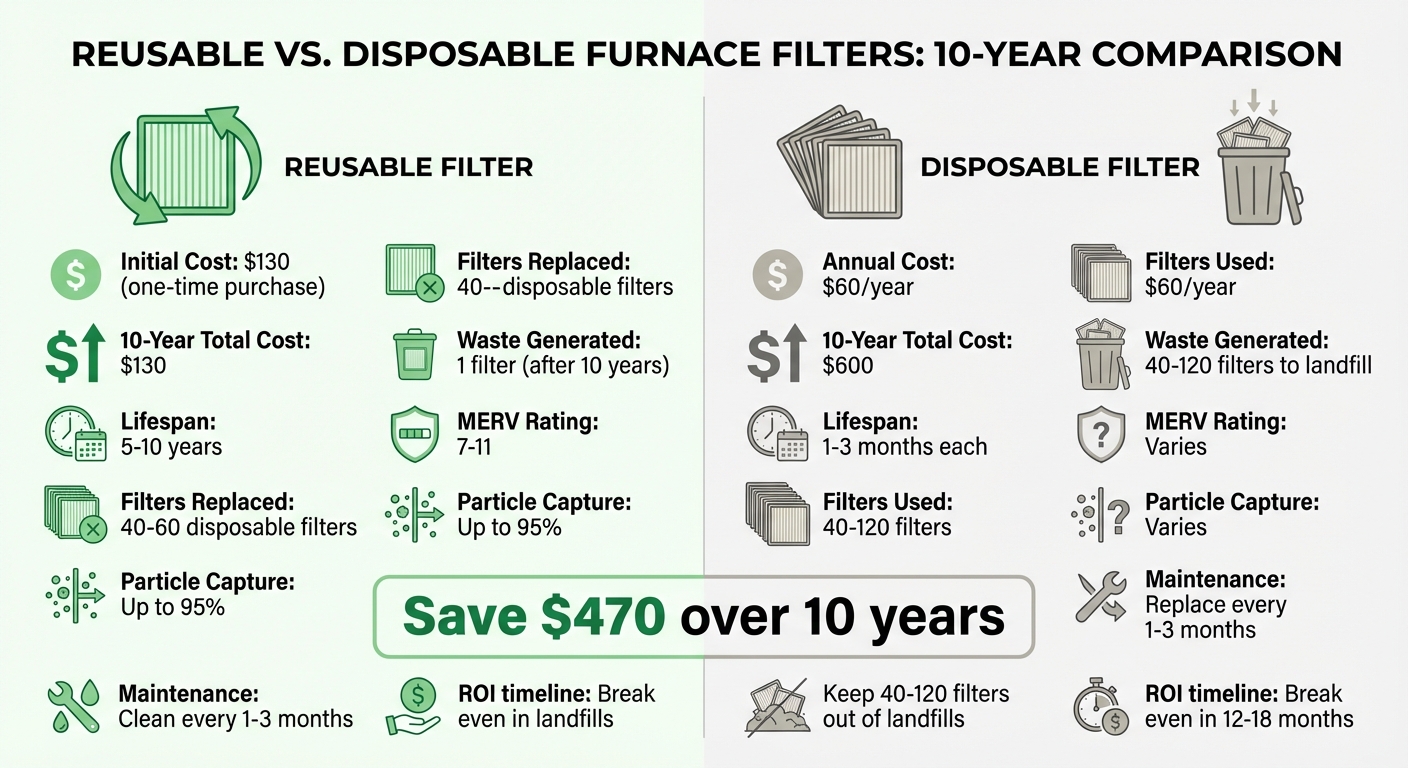
Reusable vs Disposable Furnace Filters: Cost Savings and Environmental Impact Over 10 Years
How Reusable Furnace Filters Work
What Are Reusable Furnace Filters?
Reusable furnace filters are made from durable materials like electrostatic fibers, polyester media, or aluminum mesh, designed to last for years. Unlike disposable filters, which rely on a dense weave to trap particles, reusable filters use static electricity to capture contaminants. When air flows through the filter, particles gain an electric charge and stick to fibers with an opposite charge.
"As air passes through the filter, particles receive an electric charge. This causes them to stick to oppositely charged fibers in the filter." – Filter King
To keep their static charge effective, these filters need periodic washing. Some models even require heat exposure to recharge their electrostatic properties. Up next, let’s look at how MERV ratings help measure a filter's performance.
MERV Ratings and Air Quality
MERV, or Minimum Efficiency Reporting Value, is a scale from 1 to 20 that measures how well a filter captures particles between 0.3 and 10 microns. Standard washable filters typically fall around MERV 4, while electrostatic reusable filters often range from MERV 4 to 10. For most U.S. homes, MERV 7–8 is ideal, as these filters capture 70% to 85% of larger airborne particles without significantly restricting airflow.
Higher MERV ratings mean better particle capture, but there’s a trade-off: increased resistance. This added resistance can make your HVAC system work harder, potentially reducing efficiency or even causing damage. If you're considering a filter rated above MERV 11, consult an HVAC professional first to ensure your system can handle the reduced airflow.
Installing Reusable Filters in Your HVAC System
Reusable filters are designed to fit into standard slots between the return air duct and the air handler assembly. When installing, make sure the arrow on the filter's frame points toward the furnace blower or fan, indicating the correct airflow direction.
Always install a fully dry filter. After washing, let the filter dry completely before putting it back in place. A damp filter in your ductwork can encourage mold growth. If time is tight, you might want to invest in a second filter so one can dry while the other is in use.
Benefits of Reusable Furnace Filters
Reusable furnace filters offer more than just basic functionality - they bring a range of long-term advantages that can benefit your wallet, reduce waste, and improve your home's air quality.
Long-Term Cost Savings
Investing in a washable furnace filter can pay off significantly over time. One reusable filter can replace 40 to 60 disposable ones during its lifespan. Most homeowners see a return on investment within 12 to 18 months. Plus, keeping the filter clean helps maintain your HVAC system's efficiency. Disposable filters, when clogged, force your system to work harder, which can lead to higher energy bills and expensive repairs, such as frozen coils or cracked heat exchangers. For optimal performance, your HVAC system should ideally run for about 15 minutes per cycle. If it’s running continuously, it could be a sign of inefficiency. These cost savings align with the environmental benefits discussed below.
Reducing Waste and Landfill Impact
The average household throws away more than 60 disposable filters over a five-year period. In contrast, a reusable filter can last anywhere from 5 to 10 years or even longer. This longevity significantly reduces the amount of waste sent to landfills and minimizes the environmental toll associated with manufacturing, packaging, and shipping disposable filters. By opting for a reusable filter, you're not just saving money - you’re also making a more eco-conscious choice.
Better Air Quality and Home Comfort
Reusable filters are designed to enhance indoor air quality and comfort, thanks to their effective MERV ratings. These filters capture common pollutants like dust, pollen, pet dander, mold spores, and smoke using durable mesh or electrostatic technology. A MERV 8-rated filter can trap 70% to 85% of airborne particles, while those rated MERV 11 or higher can capture up to 95% of contaminants. To keep your filter performing at its best, clean it every three to five months. Regular maintenance ensures steady airflow, prevents allergen buildup, and helps your HVAC system distribute temperature evenly throughout your home, creating a more comfortable and healthier indoor environment.
sbb-itb-adeab55
Selecting the Right Reusable Filter
Picking the right reusable filter is essential to enjoy the benefits of better air quality, reduced waste, and long-term savings. The key is to choose a filter that fits perfectly, is made from durable materials, and suits your home's specific needs. A poorly fitting filter can let unfiltered air slip through, which lowers its effectiveness.
Filter Sizing and HVAC Compatibility
Start by checking the dimensions printed on the frame of your current filter - this could be cardboard or plastic. You’ll typically see two measurements: the nominal size (a rounded figure like 20x25x1, used for ordering) and the actual size, which is slightly smaller, usually by about 1/4 to 1/2 inch. Common sizes in U.S. homes include 16x25x1, 20x25x1, and 16x20x1.
If your filter doesn’t have a size marked - or if there’s no filter installed - measure the slot where the filter fits. Use inches and round up to the nearest whole number. A snug fit is crucial because even small gaps can let dust and allergens bypass the filter, circulating untreated air through your home.
Material Quality and Construction
The materials and build quality of a filter can make all the difference. Look for aluminum frames - they resist rust, hold their shape after multiple washes, and stay securely in place even under strong airflow.
For the filter media, electrostatic fibers are a must. These fibers are charged to attract and trap particles like dust, pollen, pet dander, and smoke far more effectively than basic fiberglass. High-quality reusable filters often use synthetic materials, such as polyester or woven mesh, that stand up to years of cleaning without degrading.
This brings us to an excellent option: ElectroDust filters.
ElectroDust Filters: Washable and Customizable
ElectroDust offers a standout solution for U.S. homeowners: Canadian-made MERV 7 reusable filters designed for long-term use. These washable filters feature advanced electrostatic technology and even come with a lifetime warranty - making them the last filter you’ll ever need to buy.
What makes ElectroDust unique is their custom sizing option. If your HVAC system requires a non-standard filter size, you can order one tailored to your exact specifications. Starting at $129.99, these filters also offer conversion kits for larger racks, such as 3-inch or 4-inch setups. The MERV 7 rating strikes a perfect balance, capturing airborne contaminants efficiently while keeping airflow through your system smooth and steady.
Cleaning and Maintaining Your Reusable Filter
Taking care of your reusable filter not only keeps it working efficiently but also helps it last longer. The cleaning process is simple and only takes a few minutes each month.
Step-by-Step Cleaning Instructions
Start by turning off your HVAC system at the thermostat or power switch. This prevents unfiltered air from circulating while the filter is removed. Locate the filter between the return duct and the air handler, and make a note of the airflow direction arrows on the frame. This ensures you’ll reinstall it correctly.
Before washing, vacuum the filter using a soft brush attachment to get rid of surface dust. This dry cleaning step makes the washing process more effective. After vacuuming, rinse the filter with lukewarm water. For any stubborn dirt, use a mild dish soap and gently scrub with a soft-bristled brush or sponge. Avoid using bleach - it can damage the filter’s synthetic fibers and may void its warranty.
Rinse thoroughly until the water runs clear to remove all soap residue, as leftover soap can attract dust. Shake off excess water and let the filter air dry completely. As Shu Saito, Founder and CEO of All Filters LLC, explains:
Any moisture left behind creates an ideal environment for mold growth and mildew, which defeats the purpose of filtration entirely.
Once the filter is completely dry, reinsert it with the airflow arrows pointing toward the furnace or air handler. To keep your filter working at its best, establish a regular cleaning routine.
Creating a Cleaning Schedule
Set up a consistent cleaning schedule to maintain your filter’s performance. During periods of heavy HVAC use or in homes with pets, dust, or allergens, clean the filter monthly. If your home doesn’t have these factors, you might be able to clean it every two to three months, but it’s still a good idea to visually inspect it each month.
An easy way to stay on track is to mark the first day of each month as "filter day." However, if you notice gray, ashy buildup on the duct side of the filter or if your HVAC system starts running longer than usual, clean the filter right away instead of waiting for the scheduled day.
Inspecting for Damage and Wear
Every time you clean your filter, take a moment to inspect it for any damage. Look for tears in the mesh, frayed edges, or bent and cracked frames. Hold the cleaned, dried filter up to a bright light - if light doesn’t pass through certain areas, it could mean there’s still deep-seated dirt.
Even though reusable filters often come with lifetime warranties, visible damage or persistent clogging means it’s time to replace the filter. When properly cared for, your ElectroDust filter can replace over 40 disposable filters over a lifespan of 5 to 10 years.
Conclusion
Reusable filters provide a smart and eco-friendly way to improve your home's air quality while saving money in the long run. Although the initial cost of a reusable filter is about $130, it easily outpaces disposable filters, which cost around $60 per year. Over a decade, that’s a savings of roughly $470 - and it keeps 40 to 120 disposable filters out of landfills. As Bobby from Texas shared:
After installation, we've experienced fewer allergy symptoms and reduced A/C run times.
When maintained correctly, electrostatic filters are capable of trapping up to 95% of airborne particles. This not only contributes to cleaner air but also helps your HVAC system run more efficiently, benefiting both your health and your wallet.
ElectroDust filters stand out with their durability, customizable sizing, and lifetime warranty, ensuring a snug fit for your HVAC system. With just monthly cleaning and regular care, these filters can last anywhere from 5 to 10 years. This one-time investment simplifies upkeep, reduces costs, and supports a healthier home while minimizing your environmental footprint. It’s a practical step toward cleaner air and a greener future.
FAQs
How can I figure out the right size for a reusable furnace filter?
To figure out the right size for your reusable furnace filter, start by switching off your HVAC system. Then, locate the current filter - it’s usually behind a return grille or inside the furnace cabinet. Look for a label on the frame displaying dimensions in the format Length × Width × Thickness (e.g., 16 × 20 × 1 in). These numbers indicate the nominal size you’ll need to buy.
If there’s no label, grab a tape measure and take the measurements yourself. Measure the length (the longer side), width (the shorter side), and thickness (the depth) in inches. Ensure the filter fits securely in the slot without leaving gaps or requiring force. Once you’ve got the right dimensions, select a reusable filter that matches them to maintain proper airflow and system performance. For future ease, write down the size so you won’t have to measure again.
How can I properly maintain my reusable furnace filter to extend its lifespan?
To maintain your reusable furnace filter and keep it working efficiently, begin by turning off your HVAC system. Carefully remove the filter and use a soft brush or vacuum to clear away any loose dust and debris. Then, rinse both sides of the filter with lukewarm water and a bit of mild detergent to clean it thoroughly. Make sure to let the filter air-dry completely before placing it back into the system. Regular cleaning not only improves air quality but also extends the life of your filter.
Can a high-MERV reusable filter impact how my HVAC system works?
Yes, using a high-MERV reusable filter can impact your HVAC system's performance. Filters with higher MERV ratings are great at trapping smaller particles, but they can also reduce airflow if your system isn’t built to handle them. This restricted airflow might force your HVAC unit to work harder, which could lower its efficiency or even shorten its lifespan.
To prevent these problems, confirm that your system is compatible with high-MERV filters. Regularly cleaning the filter is also crucial - it helps maintain proper airflow and keeps your system running smoothly.